The Challenge
Larger restaurant footprints introduce compounding infrastructure demands: significant cooking loads, ventilation pressure balancing, sanitation-driven plumbing volume, and nontrivial electrical service planning. In hot-climate markets, cooling strategy and kitchen make-up air assumptions become central to operational success.
Chef's Roma Kitchen needed a technical plan set that could support permitting, contractor pricing, and long-term reliability while still honoring hospitality layout and guest-experience goals.
Design Strategy
Mechanical
TS9Designs developed load assumptions by zone and coordinated kitchen support airflows with dining comfort priorities. Ventilation strategy accounted for heavy kitchen operation and practical pressure relationships across front- and back-of-house spaces.
Electrical
Electrical planning included service and panel sizing based on connected load and demand methodology, with dedicated support for kitchen systems and structured panel schedules that improve troubleshooting and future expansion flexibility.
Plumbing
Domestic and sanitary systems were sized using fixture-unit logic aligned with restaurant use intensity. Design included maintainable routing strategy, hot-water support assumptions for high sanitation frequency, and practical service access.
Coordination and QA
Because TS9Designs coordinated architectural and MEP scopes, equipment footprints, pathways, and clearances were resolved early. QA checks validated consistency across schedules, notes, and calculated assumptions before issue.
Permitting and Code Approach
The permit set was structured for code-review clarity, with organized schedule documentation and assumptions that reduce plan-review friction and improve field interpretation.
Construction Documentation Deliverables
- Integrated architectural and MEP permit set
- HVAC and ventilation support documentation
- Electrical service and panel schedules
- Plumbing fixture/sanitary planning sheets
- Lighting and controls coordination
- General construction and QA notes
Outcomes
The project received a technically coherent design package that supports both buildability and daily operations. The documentation quality improved contractor clarity and reduced avoidable coordination gaps.
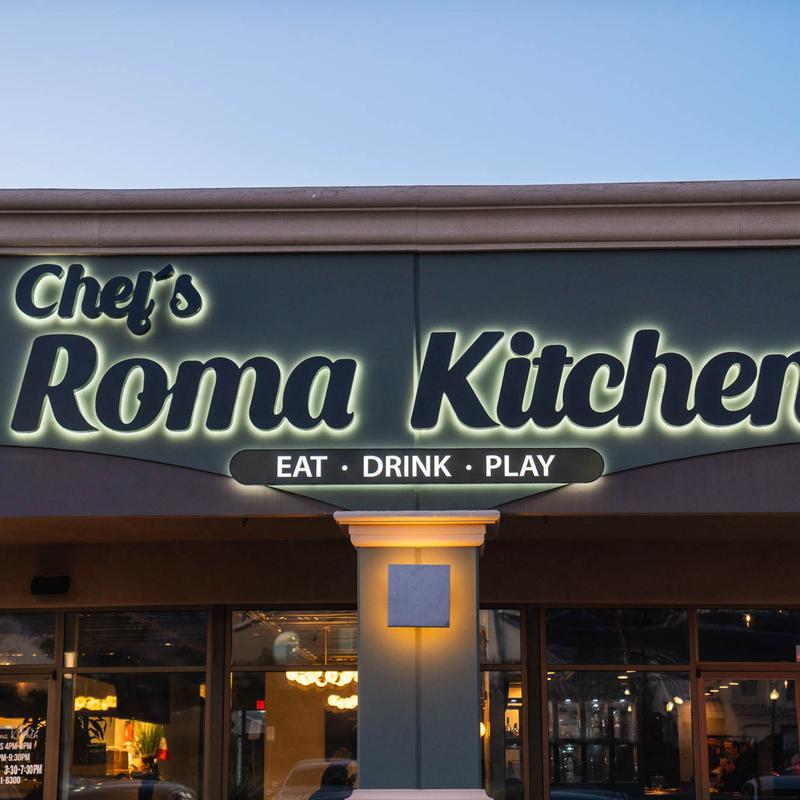
Chef's Roma Kitchen demonstrates TS9Designs' ability to pair hospitality-focused design intent with robust engineering execution at full-service scale.
Educational Best Practices
- Treat restaurant mechanical strategy as a zoned system, not a single-condition assumption.
- Use demand-based electrical planning for kitchen-heavy projects.
- Align hot-water assumptions with sanitation reality, not average use.
- Coordinate architecture and MEP to reduce equipment/pathway conflicts.
- Prioritize clarity in schedules and notes to support field execution.
Building a restaurant that needs strong technical backbone and clean design coordination? TS9Designs delivers integrated permit-ready packages built for real operations.